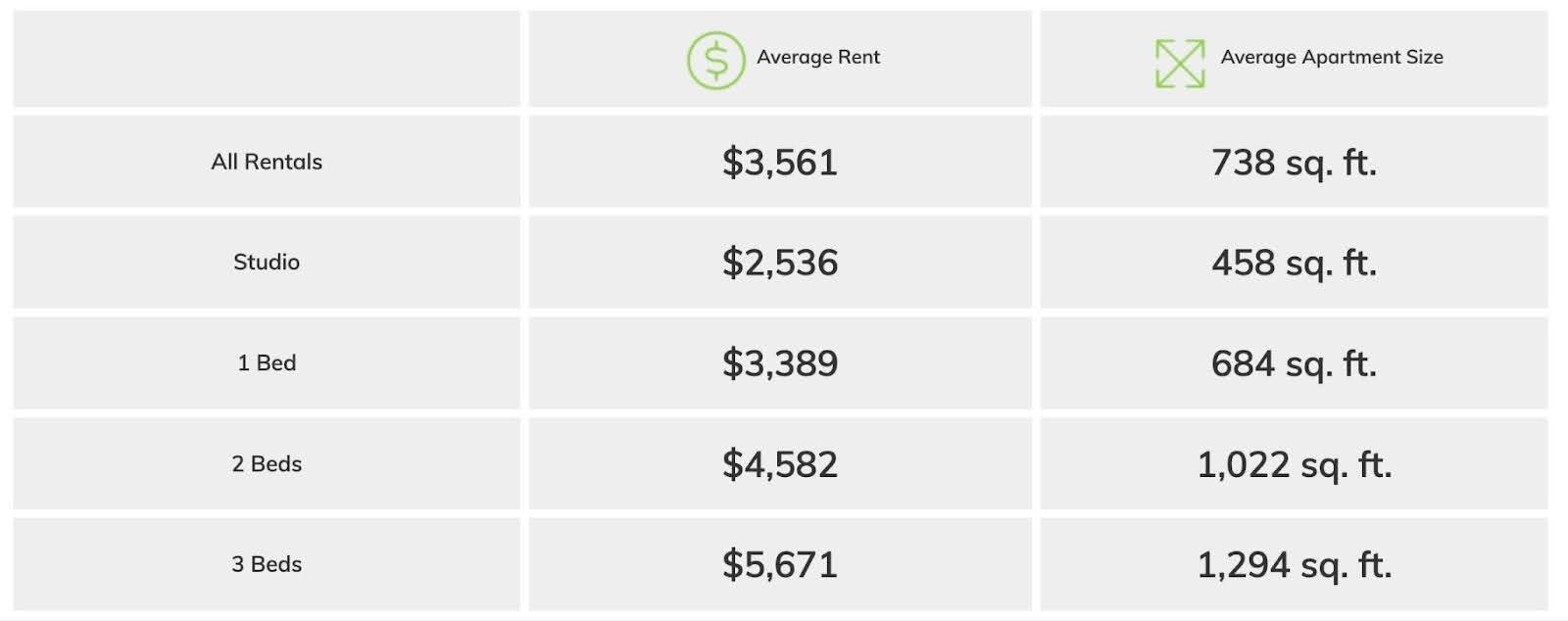
San Francisco rents continue to climb. The average apartment now rents for $3,561, up 5.5% year over year, while one-bedroom units have jumped more than 15%, reflecting especially strong demand in the city’s most popular rental segment. Studios remain the most affordable option at $2,536, while one-bedrooms average $3,389. Two-bedroom apartments command $4,582, and three-bedroom units average $5,671. The takeaway is clear: rental pressure remains elevated, reinforcing why more renters are exploring ownership as a long-term alternative. (RentCafe)
More Renters Than Owners
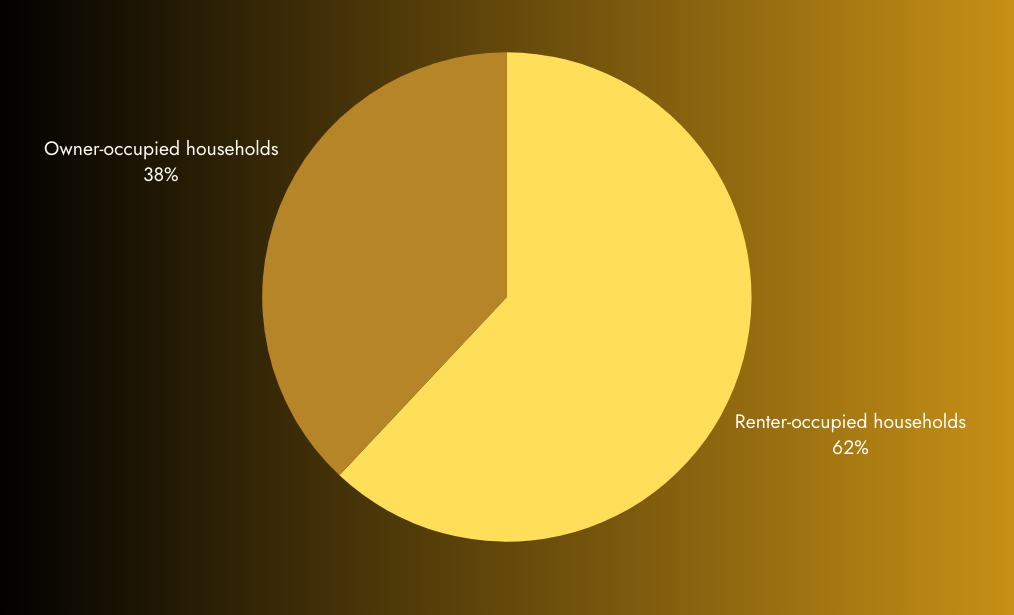
San Francisco remains a renter-heavy city. Approximately 62% of households–about 223,000 homes–are renter-occupied, while just 38% (roughly 140,000 households) are owner-occupied, underscoring the city’s long-standing imbalance between renters and homeowners. Rental costs vary widely by neighborhood. The most affordable area– including the Tenderloin ($2,071/month), Downtown District 8 – Northeast ($2,412), and North Waterfront ($2,785)–all fall well below the citywide average rent of $3,561. At the other end of the spectrum, premium neighborhoods such as Presidio ($5,375), Nob Hill ($4,458), and Russian Hill ($4,430) command the highest rents, driven by location and sustained demand. Many neighborhoods–including Mission Bay, Potrero Hill, South Beach, Hayes Valley, and Dogpatch–now cluster near or above the $4,000/month mark, reinforcing the growing financial pressure on renters across the city. (RentCafe)
Current Mortgage Rates
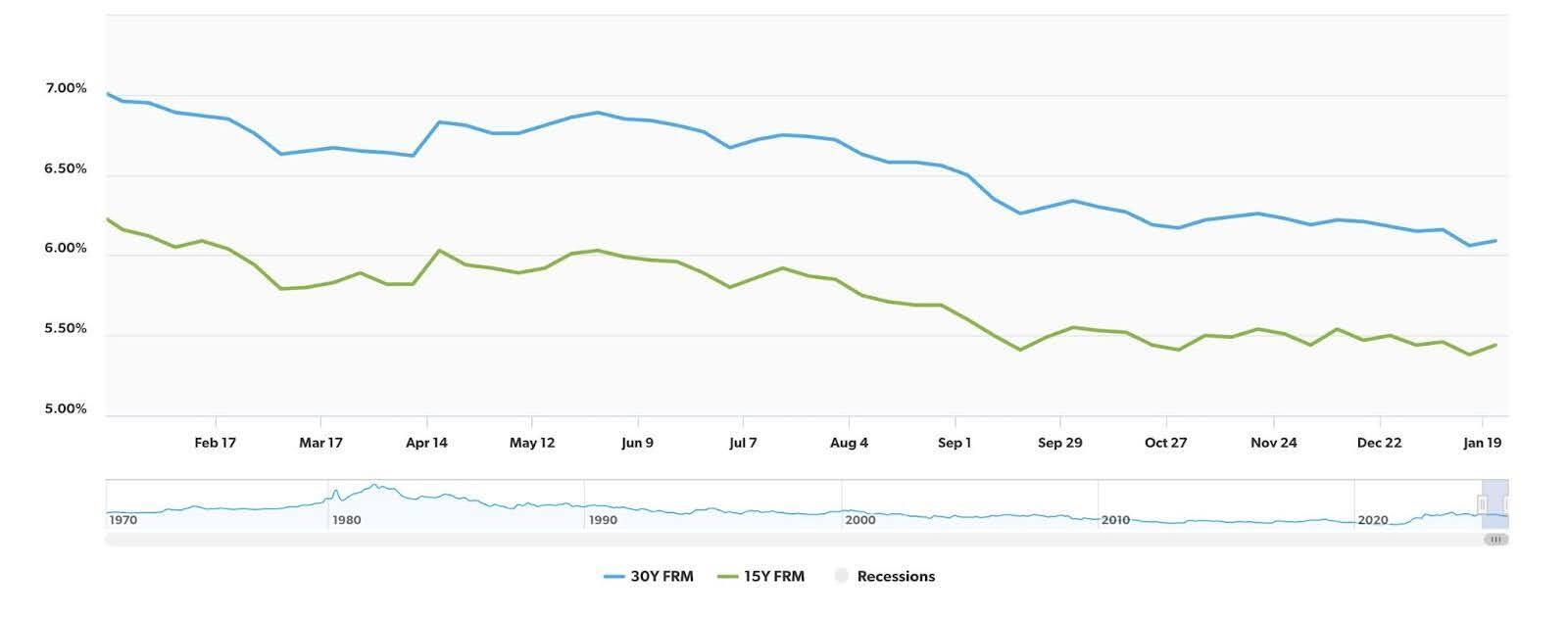
Mortgage rates have hit their lowest point in 3 years. The 30-year fixed-rate mortgage sits at 6.09% for the week ending January 22, 2026, while the 15-year fixed-rate mortgage is at 5.44%, considerably below where they were last year at this time (6.96% and 6.16%, respectively). (Freddie Mac)
Mortgage Rate Trends
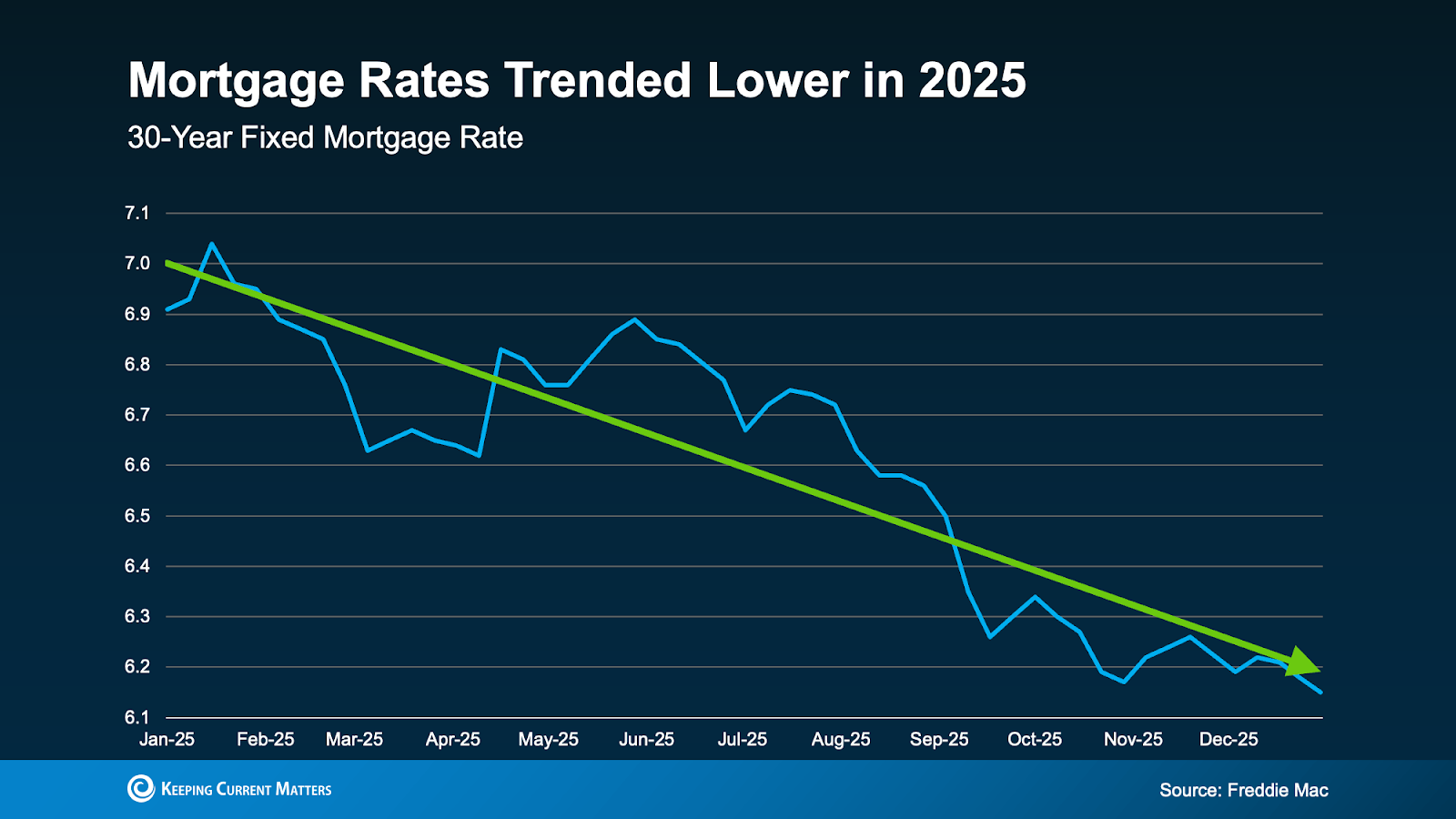
Mortgage rates didn’t move in a straight line in 2025, but the direction mattered. The 30-year fixed rate trended lower over the year, improving affordability and bringing more buyers back off the sidelines. (Keeping Current Matters, Freddie Mac)
San Francisco Median Prices
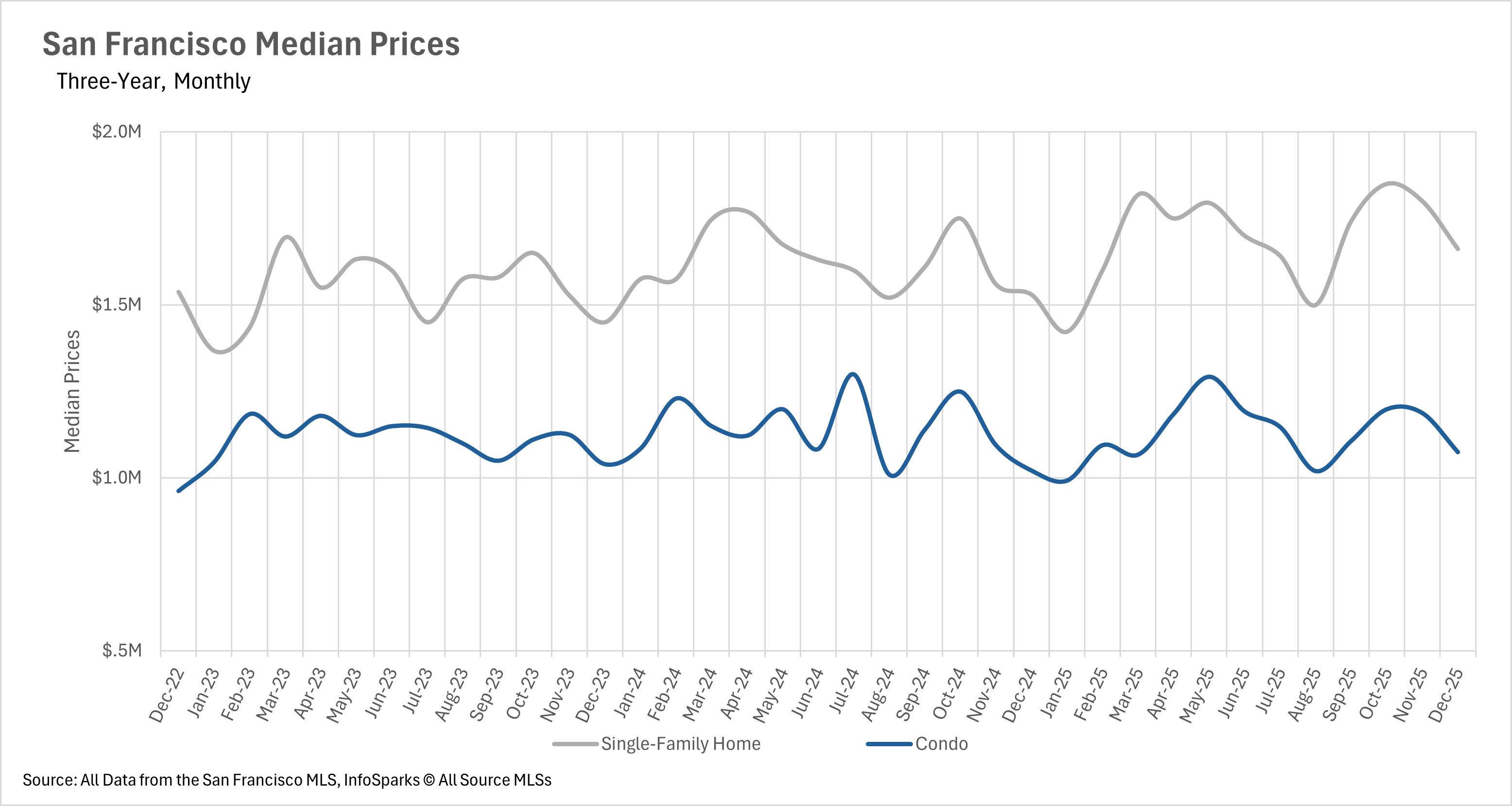
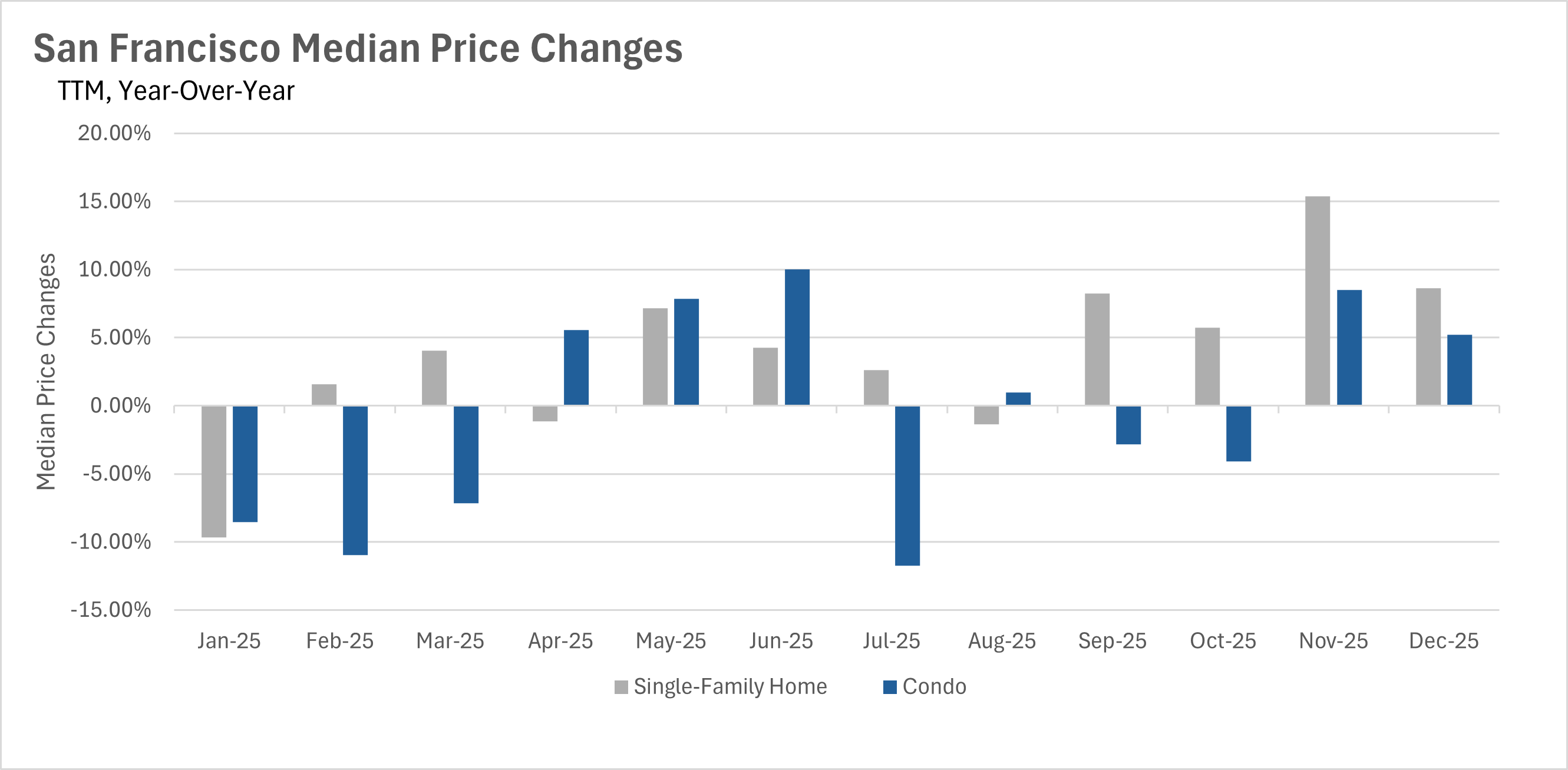
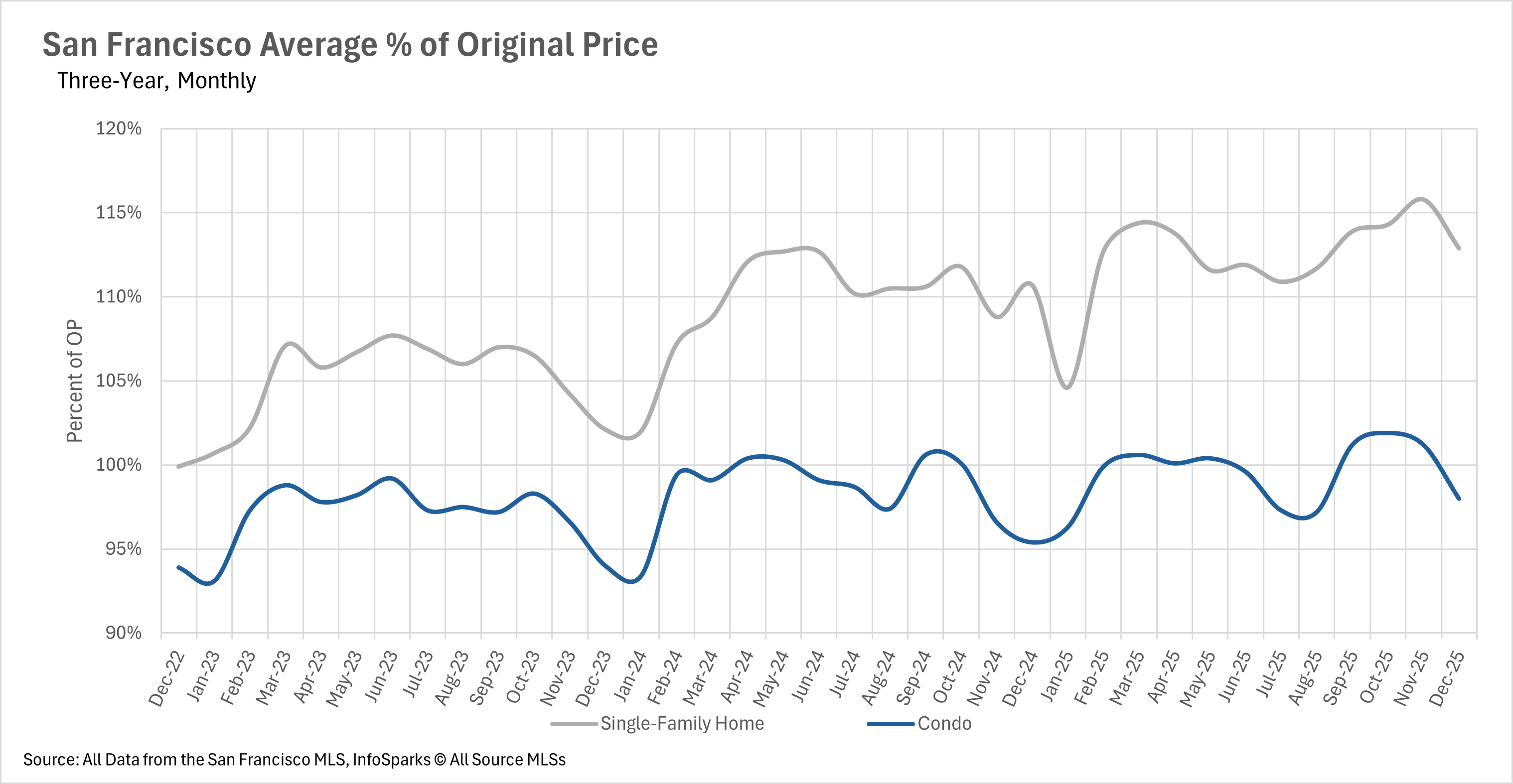
The San Francisco housing market closed out 2025 with impressive year-over-year gains in median sale prices. Single-family homes saw an 8.63% increase, with the median home selling for $1,662,000. Condos also performed well, with the median sale price increasing by 5.21% to $1,075,000. Single-family homes continue to command significant premiums, with the average home selling for nearly 13% over the original asking price. Meanwhile, condos are selling right around their asking prices at 98% of list price.
Inventory Hits Rock Bottom as Few Single-Family Homes Remain on the Market
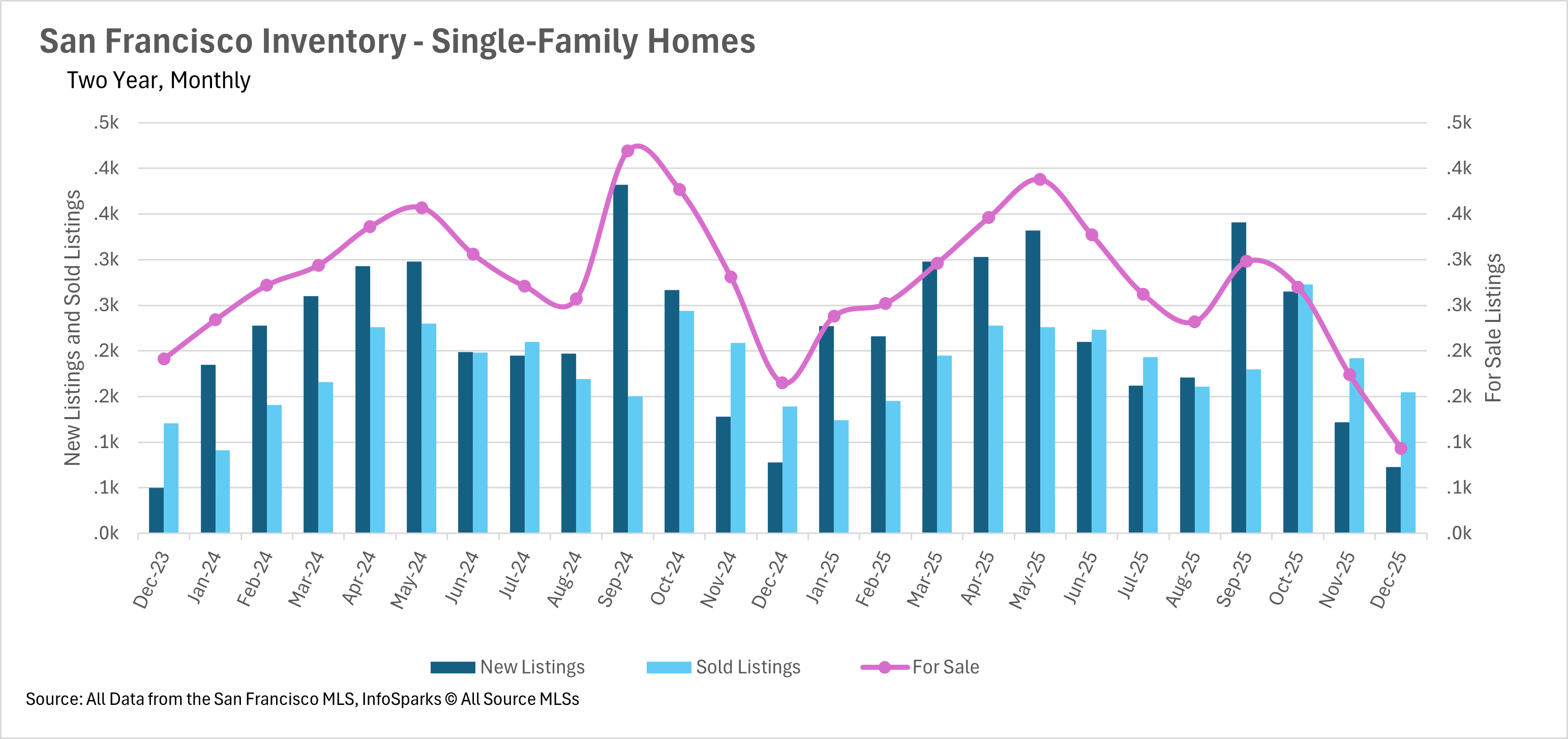
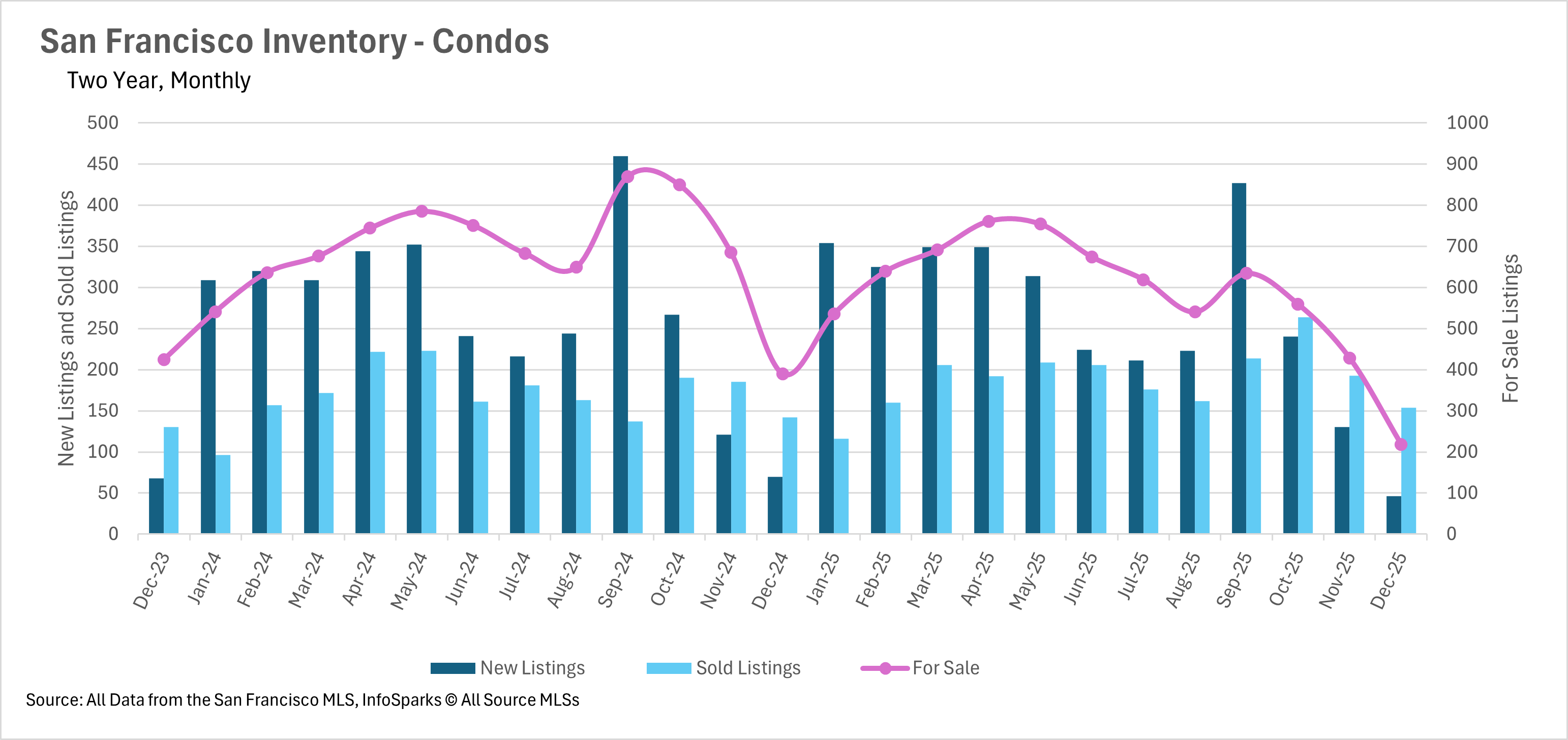
San Francisco is experiencing an unprecedented decline in housing inventory. There are currently just 138 single-family homes for sale across the entire city, representing a nearly 70% year-over-year decline. The condo market has seen a similar contraction, with only 290 condos and 47 TICs currently available. Combined, this leaves just 472 homes for sale in San Francisco, making it extraordinarily difficult for buyers to find suitable properties. Until more homeowners choose to list their homes, this severe inventory shortage will continue to define the market.
San Francisco has Become One of the Tightest Seller's Markets in the State
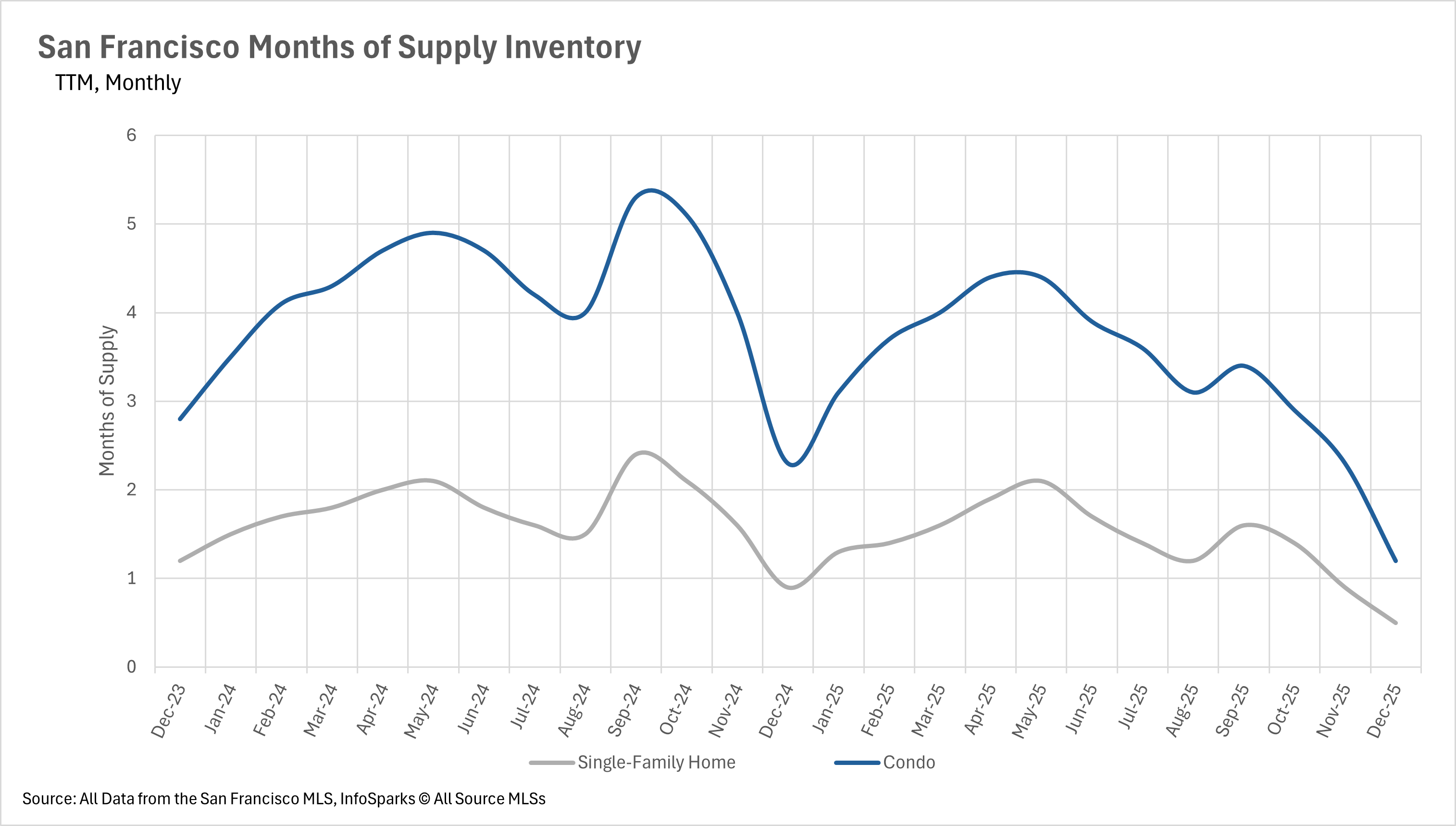
When determining whether a market is a buyers’ market or a sellers’ market, we look to the Months of Supply Inventory (MSI) metric. The state of California has historically averaged around three months of MSI, so any area with at or around three months of MSI is considered a balanced market. Any market that has lower than three months of MSI is considered a sellers’ market, whereas markets with more than three months of MSI are considered buyers’ markets.
With just 0.5 months of single-family home inventory and 1.2 months of condo inventory on the market, San Francisco has become a deeply entrenched seller's market across all property types. These are some of the lowest MSI figures we've seen in years, and there is no indication that conditions will ease for buyers any time soon. Until significant new inventory enters the market, sellers will continue to hold all the cards in San Francisco.